A world with a promise above it.
A pale blue rain falls without end. People believe it is sacred and healing. Above the clouds, a tower is said to hold the Blue Lake—and sunlight that those below have never seen.
The player is a wandering fighter with missing memories and the ability to move between light and shadow. Accompanied by a girl from outside the tower, the protagonist climbs through regions shaped by different eras. The journey asks what the rain, the tower, and the lake really are.
The narrative is built around characters with purposes of their own. Recovering the protagonist’s memories should reveal other people’s motives as well as restore abilities.
Change form. Change what counts as ground.
In light form, the player moves with conventional gravity and floor surfaces. In shadow form, a shadow’s boundary becomes a new traversable surface. Switching form therefore changes the spatial rules of an encounter, rather than simply changing the character’s appearance.
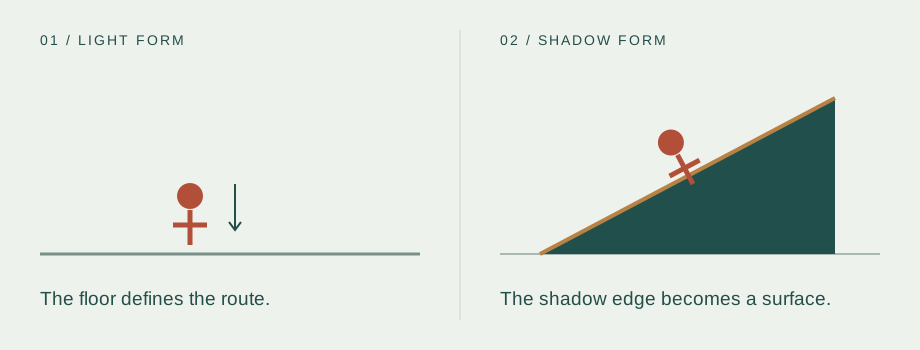
A cooldown makes the switch a commitment. The player must consider where a shadow leads and whether the return to light will leave them exposed. Lighting can also be changed—for example, by breaking a lamp—so the route itself becomes something the player can influence.
Traversal
Reach surfaces unavailable under normal gravity. Read light sources and occluders as part of the level’s movement system.
Combat & avoidance
Use shadows to bypass sightlines, approach an assassination, or shelter from an attack. Boss shadows can create temporary opportunities within a fight.
The lighting changes the play.
The tower’s visual progression supports a mechanical progression. The amount and shape of shadow change as the player climbs and gains a broader combat toolkit.
| Region direction | Lighting condition | Intended emphasis |
|---|---|---|
| Lower, steampunk spaces | Numerous shadows, including those produced by steam | Puzzles, indirect routes, stealth |
| Higher, cyberpunk spaces | Fewer, more sharply shaped shadows | More deliberate switching and combat decisions |
| Upper, Chinese-inspired spaces | Diffuse daylight and limited shadow | Greater use of the expanded combat kit |
These are tendencies, not fixed solutions. Early combat should remain possible, while the changing environment encourages the player to reconsider familiar habits.
The art direction should change the choices available to the player.
Let the next place feel different.
Boss approaches gradually increase enemy density, musical pace, and narrative clues. The aftermath makes room for slower music, rewards, and story. An elevator or transition then reveals the next region’s visual identity.
One proposed sequence uses a narrow, linear corridor lined with murals. As the player moves, the images unfold in order, turning traversal into a way of reading a story.
Color and pattern also have practical roles: they identify puzzle elements, possible routes, and collectibles. Their meaning needs to stay legible even when the surrounding art style changes.
Return with a different understanding.
The first journey is relatively directed, with abilities and map gates controlling access. Later runs are intended to reveal routes, collectibles, and narrative perspectives that were previously unavailable.
The purpose of returning is recontextualization. A familiar character or place should mean something different once the player has new information, instead of simply repeating an encounter with higher numbers.
What needs to be proven in play.
The document establishes the concept. A prototype would need to test whether the light-and-shadow rules remain understandable during movement and combat.
- Can players predict which shadow boundaries are traversable?
- Does the switch cooldown create anticipation without making movement feel unresponsive?
- Can environmental lighting support puzzles without producing unintended routes?
- Do later regions offer meaningful shadow decisions even as combat becomes more prominent?
English web edition adapted from the main design document. Embedded databases and external reference boards are available in the original.
View the original design document